In brief
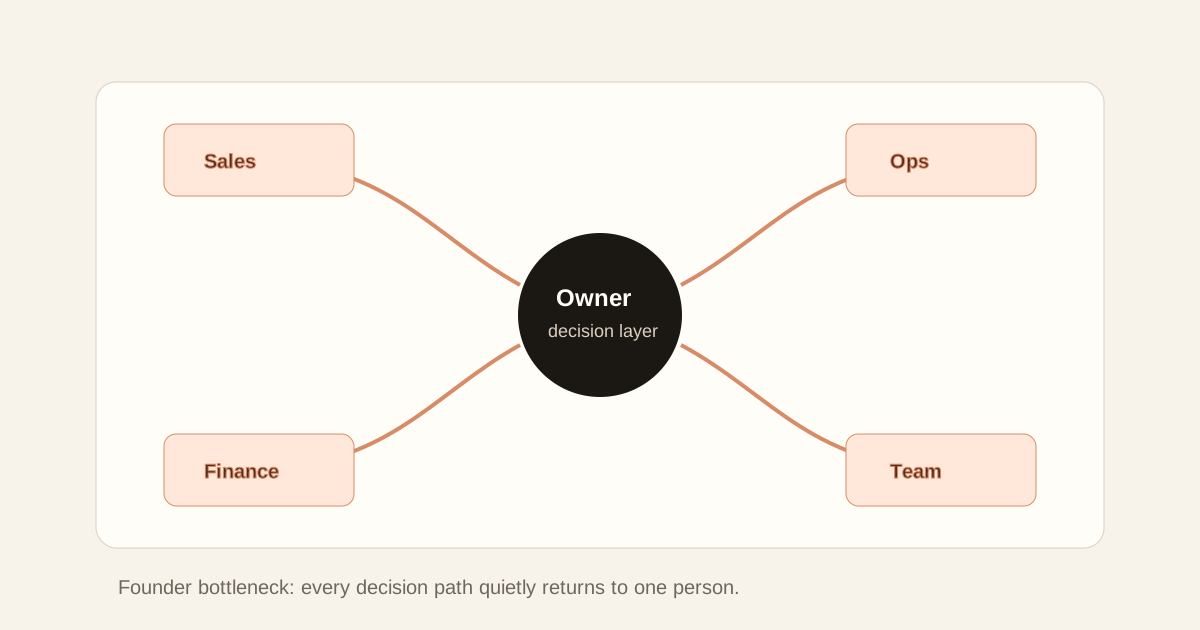
- Resistance is often a signal that the organization has not explained what changes, what remains human, and who is accountable when the tool is wrong.
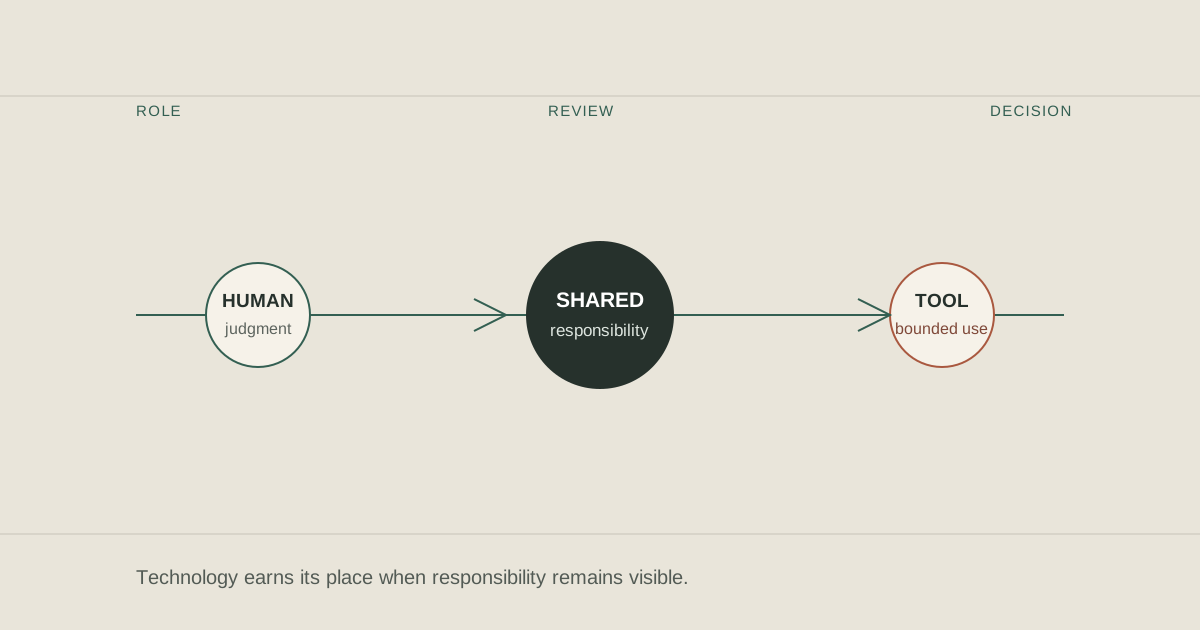
- A responsible adoption decision names the work to improve, the work not to automate, the review boundary, and the role transition before measuring usage.
- The first experiment should be small enough to observe real behavior, workarounds, quality, and trust before a mandate or scale decision.
The tool is not the adoption problem
When a new AI tool arrives, leaders often frame the task as training: show people the interface, publish a policy, and measure logins. That skips the question employees are actually carrying: what will count as good work now, and what responsibility will still belong to me?
A tool can be useful and still be introduced badly. The friction may sit in role identity, review time, quality standards, escalation, or the fear that using the tool makes accountability ambiguous.
Name four decisions before choosing a rollout plan
Before asking a team to adopt a tool, make four decisions visible.
- What work should become easier, safer, or more consistent?
- What work must remain human because judgment, consequence, or relationship cannot be delegated responsibly?
- What must be reviewed by a person, and what evidence is enough to accept the output?
- How does each role change when the tool works, fails, or produces an exception?
Run an operating experiment, not a compliance campaign
Choose one workflow with a clear owner and a visible consequence. Define a use case and a non-use case, then give the team a short period to try it with explicit review rules. Observe actual use, quiet workarounds, rework, confidence, and decision quality. The next decision should be based on what the system learned, not on whether everyone clicked the tool.
A better adoption question
The responsible question is not “How do we make people use AI?” It is “What should this technology help people do better, and what must we redesign so they can remain accountable while doing it?” That question keeps the human system visible while making room for the tool to earn its place.
Continue exploring
Take the next question to the right place.
Continue at the pace your decision needs
You do not need to contact us yet. Start with the question closest to what is happening.
When a real decision is live, share the situation and SE Ocean can assess the responsible starting point.
Related questions
Is this anti-AI?
No. It is a case for using technology where it improves human work and judgment, with clear responsibility and evidence rather than forced usage.
What should we do first?
Start with one live workflow, one decision owner, one use case, one non-use case, and a review condition that the people doing the work can understand.