In brief
- A workflow can look orderly while hiding the decisions that create delay, rework, and escalation.
- Mapping the decision path makes authority, evidence, acceptance, and exceptions visible before a team invests in process automation or a new operating model.
- Start with one consequential path and redesign only after the organization can explain what moves the work forward and who can accept the outcome.
A workflow is not the same as a decision path
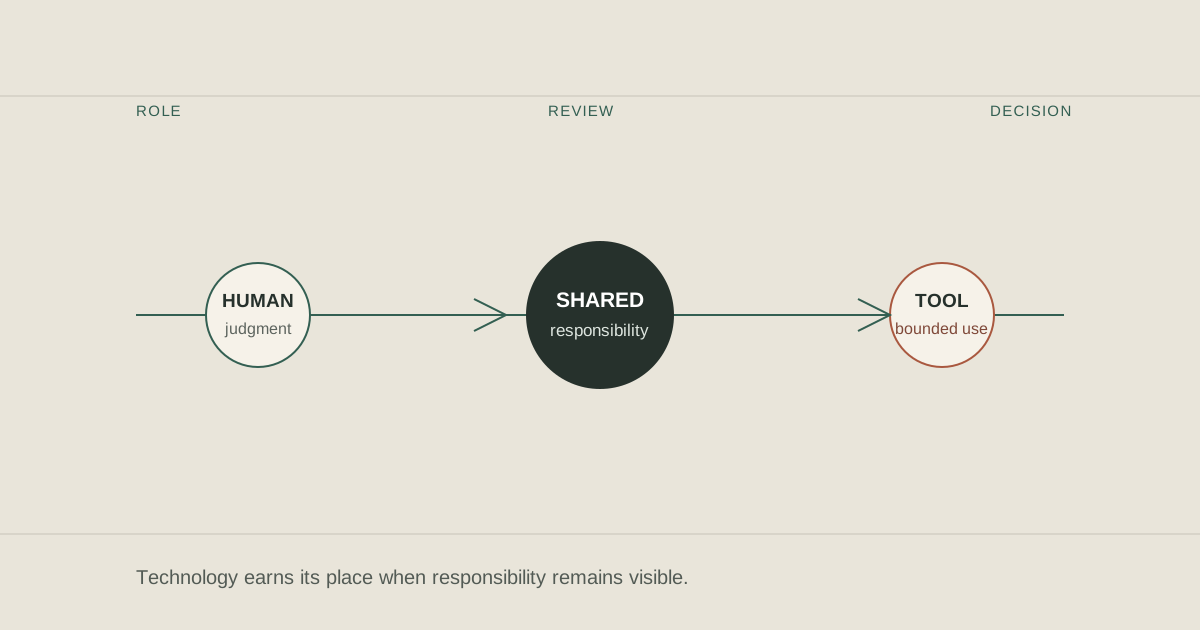
A workflow describes tasks in sequence: receive, review, approve, deliver. That is useful, but it can conceal the choices that actually govern progress. A decision path asks what changes priority, cost, risk, scope, or customer commitment; what evidence is needed; and who can accept the consequence.
When those decisions are invisible, a team may redesign task order without reducing the real bottleneck. The new workflow can be cleaner on a diagram while work still waits for an undocumented approval or returns because the acceptance condition was never agreed.
Map the five elements that move work forward
Choose one path that matters: a customer commitment, a product change, a hiring decision, or an operational exception. Then map what causes work to begin and every point where a choice changes the next move.
- Trigger: what starts this work, and what information arrives with it?
- Decision: what choice changes the outcome, not just the next task?
- Authority: who can make that choice, and under what threshold?
- Evidence: what information is enough to make the decision responsibly?
- Acceptance and exception: what makes the result complete, and what route exists when the rule does not fit?
A practical example: campaign approval that never becomes a real decision
Consider a campaign workflow. Creative prepares assets, marketing reviews the message, legal checks claims, and a senior executive approves the final spend. The task sequence may be documented, yet the work keeps returning because nobody has defined which claims are pre-approved, what evidence is required for a spend exception, or who can choose speed over additional review.
The result is not simply a slow workflow. It is a missing decision architecture. Mapping the path reveals whether the delay belongs in creative review, legal risk, budget authority, or an undefined trade-off between them. Only then can the workflow be redesigned with integrity.
| Workflow symptom | Hidden decision | Design response |
|---|---|---|
| Repeated review rounds | What counts as an acceptable claim? | Set acceptance criteria and evidence |
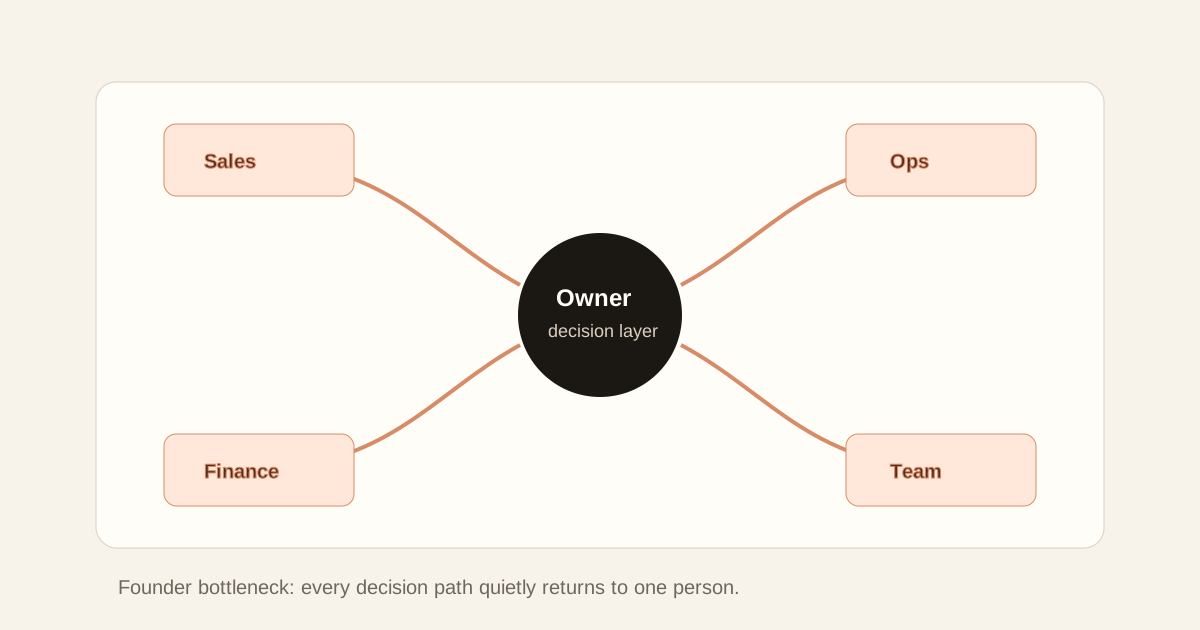
| Executive approvals pile up | What can be delegated safely? | Define threshold-based authority |
| Work restarts after handoff | Who owns the outcome across teams? | Assign outcome ownership, not only task ownership |
Redesign one consequential path before the entire system
Organizations often try to fix every workflow at once because the pain feels widespread. A more reliable move is to choose the path with the highest consequence or most repeated escalation. It creates a manageable boundary for discovering where decision rights and work design are misaligned.
After the decision path is clear, redesign can be specific: remove a duplicate review, move authority to the role carrying the outcome, create an explicit exception route, or automate a rule that is now stable. The goal is not a more elaborate process. It is dependable progress with accountable judgment.
Common mistakes in workflow redesign
Workflow redesign becomes performative when it documents activity without revealing the decision logic. Teams then work hard on diagrams, tools, and handoffs while the consequential choices still happen informally.
- Mapping ideal steps instead of tracing a recent real case.
- Assigning task owners without assigning outcome acceptance.
- Automating a handoff before the decision rule behind it is stable.
- Treating every exception as a performance failure instead of useful design evidence.
Continue exploring
Take the next question to the right place.
Continue at the pace your decision needs
You do not need to contact us yet. Start with the question closest to what is happening.
When a real decision is live, share the situation and SE Ocean can assess the responsible starting point.
Related questions
What is a decision path in workflow redesign?
It is the sequence of consequential choices that move work forward, including the authority, evidence, acceptance conditions, and exceptions around each choice. It sits beneath the visible task sequence.
Why do workflow improvements fail to reduce delays?
They often improve task order while leaving the real decision bottleneck untouched. Work still waits when authority, evidence requirements, or exception routes remain unclear.
Should workflow redesign start with automation?
No. Start by making the decision path stable and observable. Automation is most useful after the rules, owners, and exceptions are clear enough to repeat safely.