In brief
- A recurring problem is often evidence that the visible fix changed activity, while the decision path, ownership, or exception rule beneath it stayed intact.
- The fastest useful diagnosis follows one real case from trigger to outcome, including every override, wait, and handoff that the formal process leaves out.
- Do not redesign the whole organization first. Test one critical path, make the decision owner and acceptance condition explicit, then see whether the loop actually stops.
Recurring organizational problems are usually system signals
A problem that returns after a new tool, a new hire, or a reorganization is not automatically a people problem. It often means the intervention changed the visible layer of work while the system still asks people to compensate for an unresolved decision, unclear ownership, or broken handoff.
The pattern matters more than the latest incident. If experienced people keep creating workarounds, leaders keep becoming the final approver, or teams keep reopening the same conversation, the organization has not yet changed the condition that produces the problem.
Follow the loop, not the org chart
Start with one recent example that everyone agrees was costly, slow, or confusing. Trace it from the moment the work was triggered to the moment the outcome was accepted. Ask what information was needed, who could decide, who actually decided, and what happened when the case did not fit the rule.
This is different from reviewing an org chart or an ideal process. The useful map includes the unofficial escalation, the chat message that unblocks the work, the person who quietly repairs the data, and the point where nobody is authorized to accept a trade-off.
- What triggers the work and what counts as a completed outcome?
- Which decision changes cost, risk, customer impact, or priority?
- Who has the authority to make that decision in the normal case?
- What exception pushes the work outside the stated process?
- Who owns the result after the handoff, not only the task before it?
A practical example: the customer exception that keeps escalating
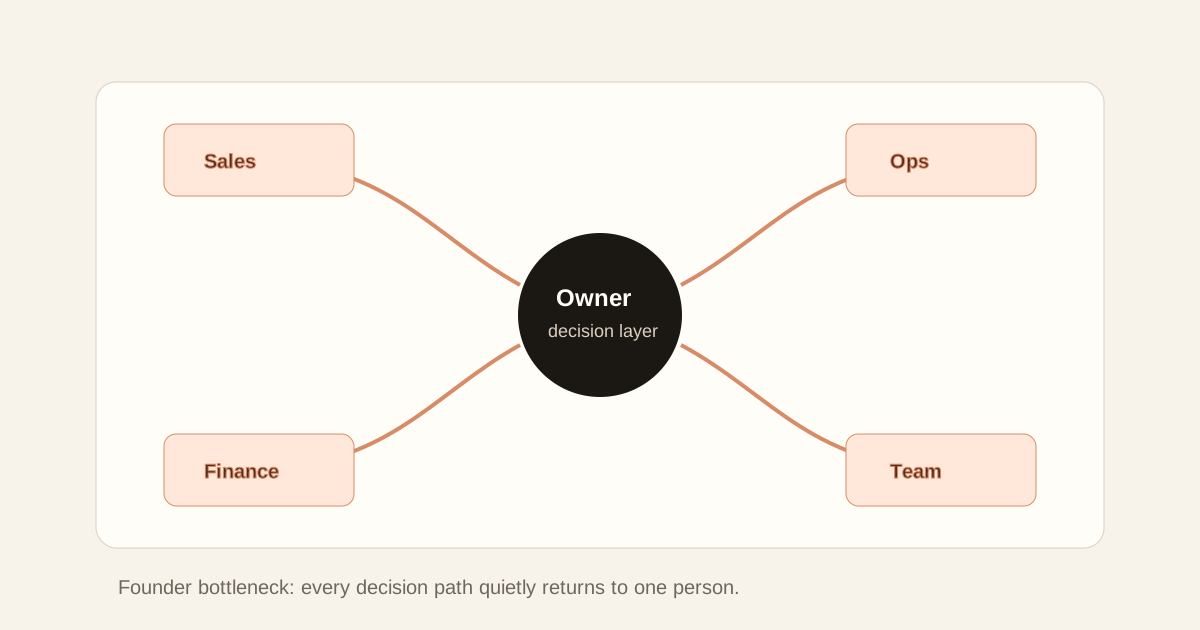
Imagine a customer team promises a delivery change, operations can technically make it, and finance must approve the commercial exception. On paper, each team owns a clear step. In practice, nobody owns the decision across all three consequences, so a senior leader is pulled in whenever time, margin, and customer commitment conflict.
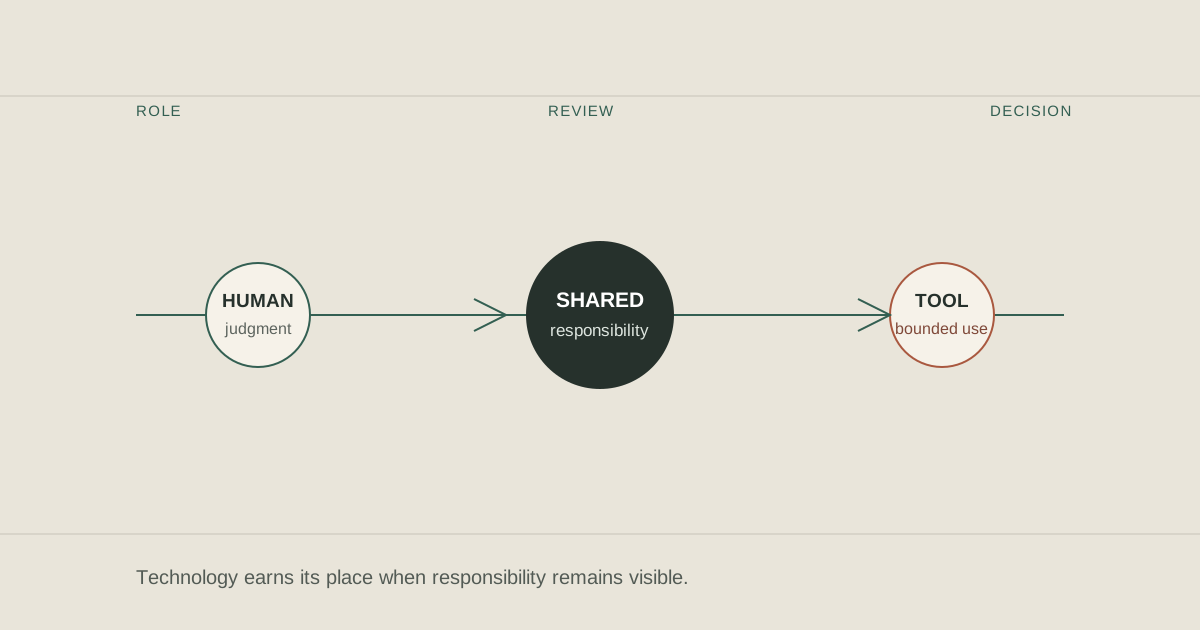
Adding a ticketing tool may make the delay more visible, but it does not decide who can accept the trade-off. Reorganizing customer success and operations may move the meeting, but it does not create a decision right. The loop stops only when the organization defines the decision boundary, the accountable owner, the evidence needed, and the escalation condition.
| Visible response | What remains unchanged | What to test instead |
|---|---|---|
| Add a new tracker | No one can accept the trade-off | Name the decision owner and threshold |
| Hire a coordinator | The coordinator still needs leader approval | Move authority with the responsibility |
| Rewrite the process | Exceptions still have no route | Define exception and escalation rules |
Test a smaller structural change before investing heavily
A responsible change begins with a narrow, observable test. Choose one recurring decision path, write the current rule and workaround in plain language, then make one structural change: assign a decision owner, clarify an acceptance condition, or define the exception route. Run that change long enough to see real cases, not only an optimistic workshop scenario.
This approach protects the organization from implementing a confident-looking solution that cannot carry the work. It also creates evidence: the next decision can be based on whether the loop changed, rather than on whether the intervention felt active.
Common mistakes when recurring problems are diagnosed
The common failure is treating recurrence as a demand for more effort. More meetings, dashboards, roles, or software can be useful after the operating logic is clear. Before then, they often add another layer for people to work around.
- Starting from a solution category before defining the decision that keeps failing.
- Calling a handoff problem a communication problem without identifying the missing owner.
- Measuring activity, such as tickets closed, while leaving outcome acceptance undefined.
- Using a reorganization to avoid a decision about authority and accountability.
Continue exploring
Take the next question to the right place.
Continue at the pace your decision needs
You do not need to contact us yet. Start with the question closest to what is happening.
When a real decision is live, share the situation and SE Ocean can assess the responsible starting point.
Related questions
Why do the same business problems return after a reorganization?
A reorganization changes reporting lines, but recurrence continues when the decision rights, handoffs, and exception rules that produce the issue have not changed. Trace a real case before changing the structure again.
How do you find the root cause of a recurring organizational problem?
Follow one recent case end to end. Map the trigger, decisions, owners, handoffs, exceptions, and outcome acceptance. The root cause is often where responsibility and authority stop matching.
Should we buy a new tool when a problem keeps returning?
Only after the underlying workflow and decision logic are clear. A tool can make work visible or faster, but it cannot create missing authority, ownership, or exception rules by itself.