In brief
- A tool can make activity faster without making authority, review, or acceptance conditions clearer.
- Quiet workarounds are evidence about the system’s boundaries, not proof that people refuse to change.
- Before measuring adoption, define when to use the tool, when not to use it, who reviews the output, and where exceptions go.
Speed is not the same as adoption
A new tool often enters an organization with a simple promise: reduce time, increase consistency, or help the team keep up. The first visible measure is usually usage. But usage can increase while the underlying work becomes harder to govern.
People may use the tool for routine cases and quietly avoid it when judgment, risk, or accountability becomes unclear. The result looks like partial adoption. It may actually be a system that has not defined where the tool belongs.
Trace five boundaries before measuring usage
A responsible technology adoption decision starts with one real workflow, not a feature list. Trace the boundaries that determine whether an output can travel safely into work.
- Decision boundary: what decision does the tool support, and what must it never decide?
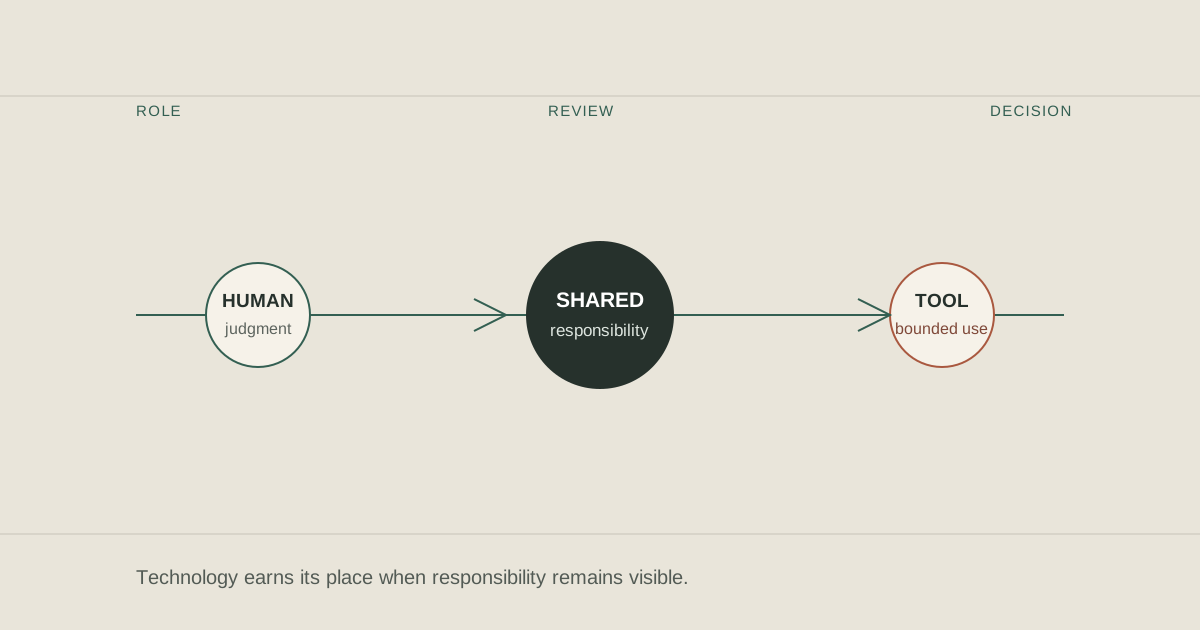
- Role boundary: which role remains accountable when the tool is wrong or incomplete?
- Review boundary: what signals require human review, and does the reviewer have time and authority to stop?
- Information boundary: which sources are permitted, excluded, stale, or uncertain?
- Exception boundary: where does a case go when it does not fit the use case?
A synthetic example: the support assistant
Imagine a support team receives an assistant that drafts replies. Routine responses become faster, but complex cases still require a senior person. No one has defined which customer signals require escalation, who approves a promise about delivery or refund, or what happens when the assistant uses stale information.
The team starts creating workarounds: copy the draft into a private document, ask a senior colleague in chat, or ignore the assistant for cases that feel risky. These behaviors are not enough to conclude that the tool failed. They are clues about missing review triggers, ownership, and acceptance conditions.
What to observe before the next scale decision
The next decision should not be based on logins alone. Observe a small operating experiment long enough to see the work that the formal rollout cannot show.
| Observe | Question | Why it matters |
|---|---|---|
| Use and non-use | When do people choose not to use the tool? | Non-use may reveal a legitimate risk boundary. |
| Workarounds | What do people add outside the official workflow? | Workarounds show missing ownership or review. |
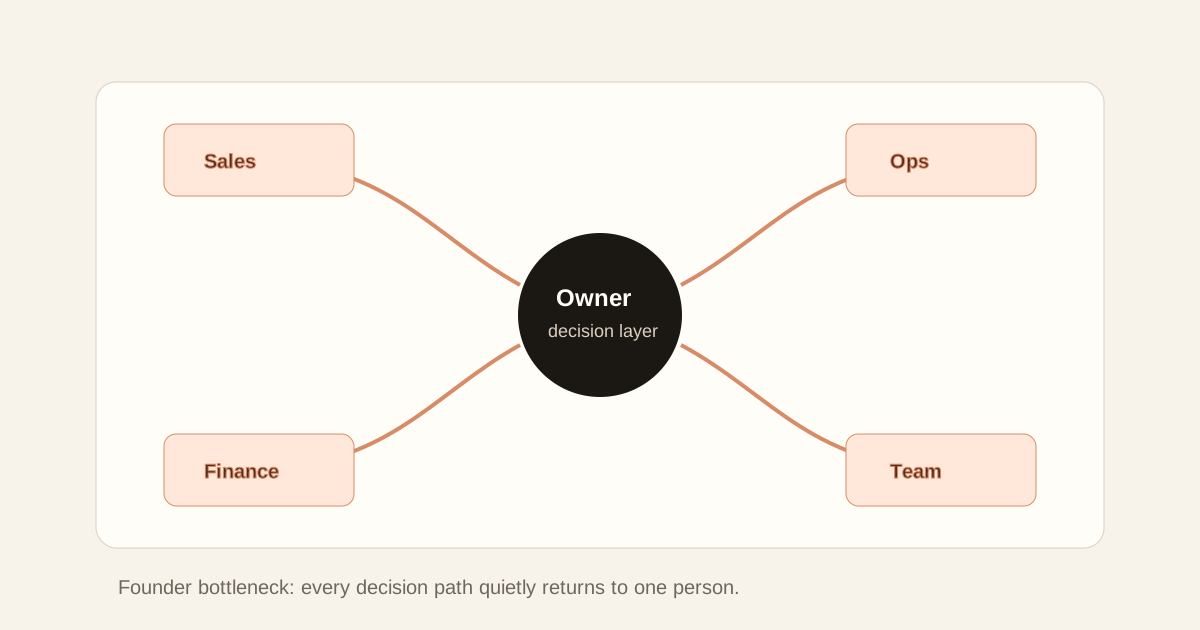
| Exceptions | Which cases return to leadership? | Exceptions reveal where authority has not moved. |
| Acceptance | What makes an output safe to act on? | Quality needs an accountable condition, not a vague review step. |
Common mistakes in technology adoption
The recurring mistake is treating adoption as a compliance problem before understanding the work. A mandate may increase visible usage while pushing uncertainty into private workarounds.
- Training people on features before naming the work and decision they are meant to improve.
- Calling a generic approval step human review without defining the trigger or reviewer’s authority.
- Measuring usage while ignoring reversals, rework, exceptions, and trust.
- Treating non-use as resistance before asking what risk the person is trying to hold.
Continue exploring
Take the next question to the right place.
Continue at the pace your decision needs
You do not need to contact us yet. Start with the question closest to what is happening.
When a real decision is live, share the situation and SE Ocean can assess the responsible starting point.
Related questions
How do you improve technology adoption in a workflow?
Start with one real workflow, define the use and non-use boundaries, name the accountable role, set human review triggers, and run a small experiment before scaling.
Is non-use always a sign of resistance?
No. Non-use may be a responsible response to unclear risk, missing information, or a lack of authority to review the output. Treat it as evidence to examine.
What should be measured before expanding a new tool?
Observe use, non-use, workarounds, exceptions, rework, quality, trust, and whether people can explain who remains accountable for the outcome.